Storm-Ready Water Storage and Off-Grid Basics for Rural Homes
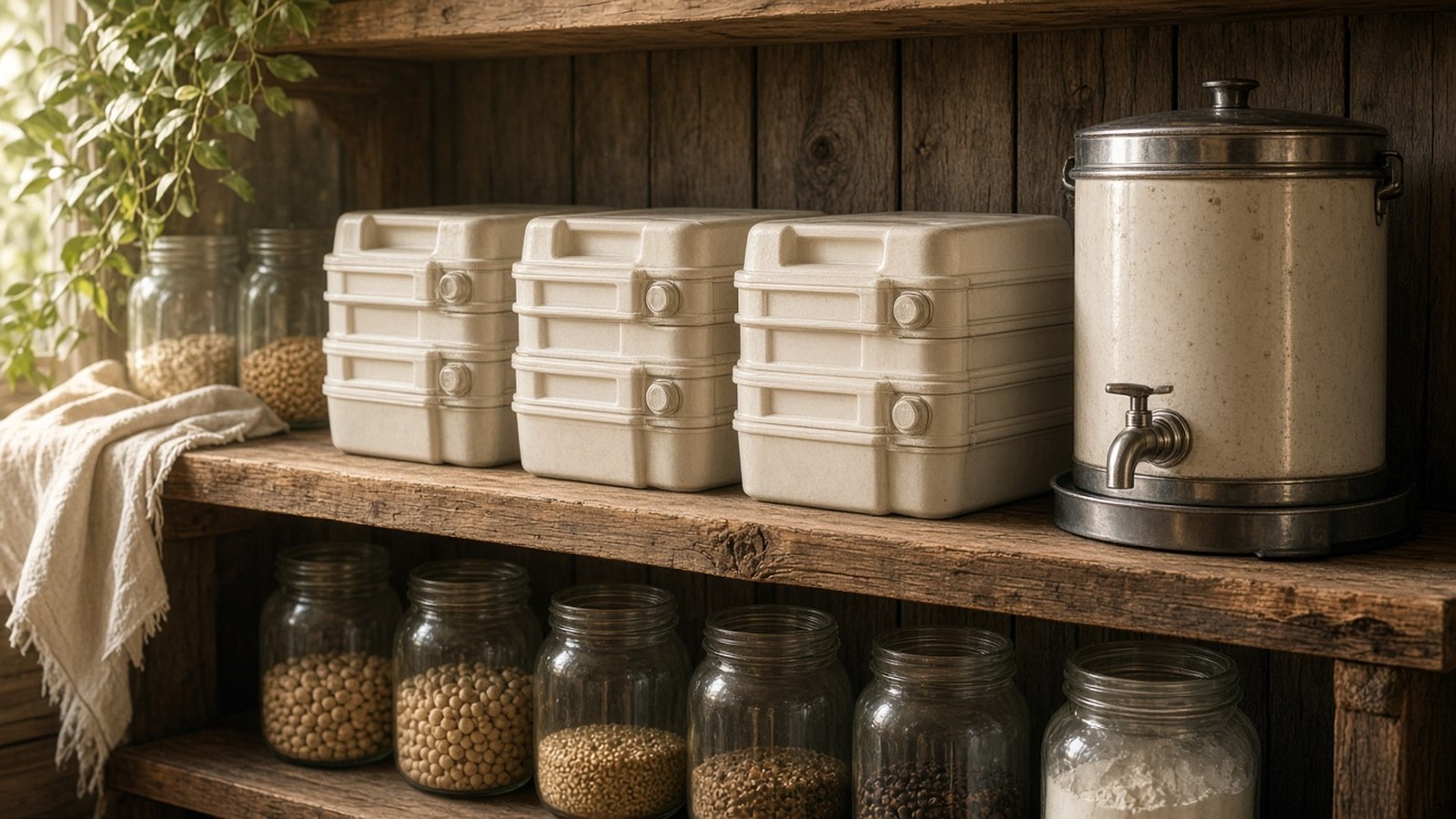
Featured Gear in This Guide
A short list for this chore. No prices, because those change. The button is a paid link.
-
Check on Amazon (paid link)
Purewell 2.25 Gallon Stainless Steel Gravity Water Filter System
Purewell
Best for Countertop filtered water
-
Check on Amazon (paid link)
Scepter 5 Gallon Military Style Water Container
Scepter
Best for Stackable stored water
-
Check on Amazon (paid link)
waterBOB Bathtub Emergency Water Storage Bladder
waterBOB
Best for Fast storage before storms
-
Check on Amazon (paid link)
TERA PUMP Emergency 55 Gallon Drum Water Pump
TERA PUMP
Best for Hand-pumping from barrels
-
Check on Amazon (paid link)
GUARD SHIELD Super Heavy Duty Poly Tarp, 10 x 12
GUARD SHIELD
Best for Storm cover and repairs
On a property with a well, losing power usually means losing water. The pump stops, the pressure tank drains after a few flushes, and suddenly everyday things like washing hands, cooking, flushing toilets, and filling horse troughs become problems. Livestock make it more urgent: a single horse can drink a lot of water in a day, and more in hot weather. A good water plan is the backbone of rural storm readiness, more so than food or even backup power.
This guide covers how much water to plan for, how to store and filter it, and five pieces of gear that make it manageable.
How much water to plan for
A common baseline for people is about one gallon per person per day for drinking and basic cooking, with more for hygiene. For animals, plan generously:
- Horses: Often 5 to 10 gallons per day each, more in heat or when lactating.
- Dogs: Roughly an ounce per pound of body weight per day.
- Toilets: A bucket of non-drinking water poured into the bowl will flush most standard toilets.
For a household of four with two horses, a three-day outage can easily require well over 100 gallons when you add it all up. That is why rural water storage usually combines several approaches: sealed containers for drinking, a bathtub bladder filled right before a storm, and barrels or stock tanks for animals and flushing.
Store water in layers
- Drinking water: Food-grade, sealed containers stored somewhere dark and cool. Rotate every six months to a year.
- Short-notice storage: A bathtub bladder or extra containers filled when a storm is forecast.
- Bulk utility water: Rain barrels or 55-gallon drums for animals and flushing, with a pump to get it out.
- Filtration: A way to make questionable water (rain, pond, or older stored water) safer to drink.
The 5-piece water readiness kit
1. Filter on the counter: Purewell Stainless Steel Gravity Filter
A gravity filter needs no power and no water pressure. You pour water into the top chamber, and it slowly drips through the filter elements into the bottom chamber, ready to pour from the spigot. That makes it useful during an outage and handy for everyday use with well water. A stainless steel housing will not crack or absorb odors, and a 2.25-gallon size keeps up with a family's drinking and cooking needs.
Why we like it: No electricity required, stainless construction, and third-party certification for chlorine and taste reduction. Trade-offs: Filter elements need periodic replacement, and gravity filtration is slow by nature. It is not a substitute for proper well testing or for treating known contamination; follow the manufacturer's guidance on what it is rated to reduce.
Check current price on Amazon (paid link)
2. Stackable stored water: Scepter 5 Gallon Water Container
These military-style containers are a favorite for a reason. They are made of thick, food-grade, BPA-free plastic, they stand upright with a narrow footprint, they stack, and at five gallons a full one is still something most adults can carry. Keep a few full in a closet or pantry for drinking water, and a few in the barn for animals.
Why we like it: Durable, stackable, and easy to pour with the spout. Trade-offs: A full container is heavy. Store them at floor level and away from direct sunlight and chemicals, which can taint the water.
Check current price on Amazon (paid link)
3. Last-minute storage: waterBOB Bathtub Water Bladder
When a storm is forecast, a bathtub bladder lets you store a large volume of clean water in a few minutes. It is a food-grade liner that sits in the tub and fills from the faucet, keeping water clean and covered instead of open to dust and pets. It comes with a small hand pump to dispense water into pitchers and pots.
Why we like it: Huge capacity, quick to set up, and it folds small for storage between storms. Trade-offs: It is meant for short-term storage during an emergency, not long-term. Fill it shortly before a storm, then use or drain the water within a couple of weeks.
Check current price on Amazon (paid link)
4. Get it out of the barrel: TERA PUMP Manual Drum Pump
If you store water in 55-gallon drums (or plan to), you need a way to get it out without tipping the barrel. A manual drum pump screws into the bung opening and lets you pump water directly into buckets. A food-grade model means the same pump can be used for drinking water.
Why we like it: No power needed, fits standard drums, and moves water steadily with modest effort. Trade-offs: Dedicate a pump to drinking water only; never use it for fuel or chemicals. Check that the adapter fits your drum's bung threads.
Check current price on Amazon (paid link)
5. Storm cover: GUARD SHIELD Heavy Duty Poly Tarp
A thick tarp is one of the most useful items in any storm kit. It can cover a damaged roof section until repairs are possible, protect hay from blowing rain, shield a woodpile, or be rigged as a rain catchment funnel into a clean container. Look for heavy mil thickness, UV resistance, reinforced edges, and closely spaced grommets so it does not tear loose in wind.
Why we like it: Thick, UV-resistant, and grommeted often enough to tie down securely. Trade-offs: Any tarp will flap and wear in high wind unless it is tied tight. Keep bungees and rope with it.
Check current price on Amazon (paid link)
Storm-prep checklist for water
- Two to three days before: Check stored containers, refresh any that are past rotation, and confirm the filter has fresh elements.
- The day before: Fill the bathtub bladder, top off stock tanks and troughs, and fill extra buckets for the barn.
- During: Use stored water for drinking and cooking first, and barrel or trough water for flushing and animals.
- After: If your well was flooded, do not drink well water until it has been tested. Your local extension office or health department can advise.
Common mistakes to avoid
- Storing water in old milk jugs. They degrade and leak. Use containers designed for water.
- Keeping containers in a hot shed in direct sun. Heat and light speed up plastic breakdown and algae growth.
- Forgetting the animals. Livestock water needs usually dwarf household needs.
- Assuming filtered means safe from everything. Know what your filter is rated for.
The bottom line
On a rural property, water is the first thing an outage takes away and the first thing you should plan for. A gravity filter, a few stackable containers, a bathtub bladder for short-notice storage, a manual drum pump, and a heavy-duty tarp will get your household and your animals through most storms with a lot less worry.
Related guides
Barn & Home Power Outage Kit: Practical Backup Power and Lighting
Plan for rural power outages with a quiet LiFePO4 power station, a foldable solar panel, rechargeable lanterns and headlamps, and a hand-crank NOAA weather radio.
The Everyday Cast Iron Starter Kit: 5 Heirloom Pieces Worth Keeping on Your Stove
A practical starter kit for cooking with cast iron every day: the skillet, the Dutch oven, and the three small tools that keep both seasoned, safe to handle, and neatly stored.
How to Set Up a Clutter-Free Farmhouse Coffee Bar That Works on Busy Mornings
Build a calm, functional coffee corner with a pour-over brewer, a conical burr grinder, a gooseneck kettle, airtight canisters, and a wood riser that keeps the counter tidy.