The Everyday Cast Iron Starter Kit: 5 Heirloom Pieces Worth Keeping on Your Stove
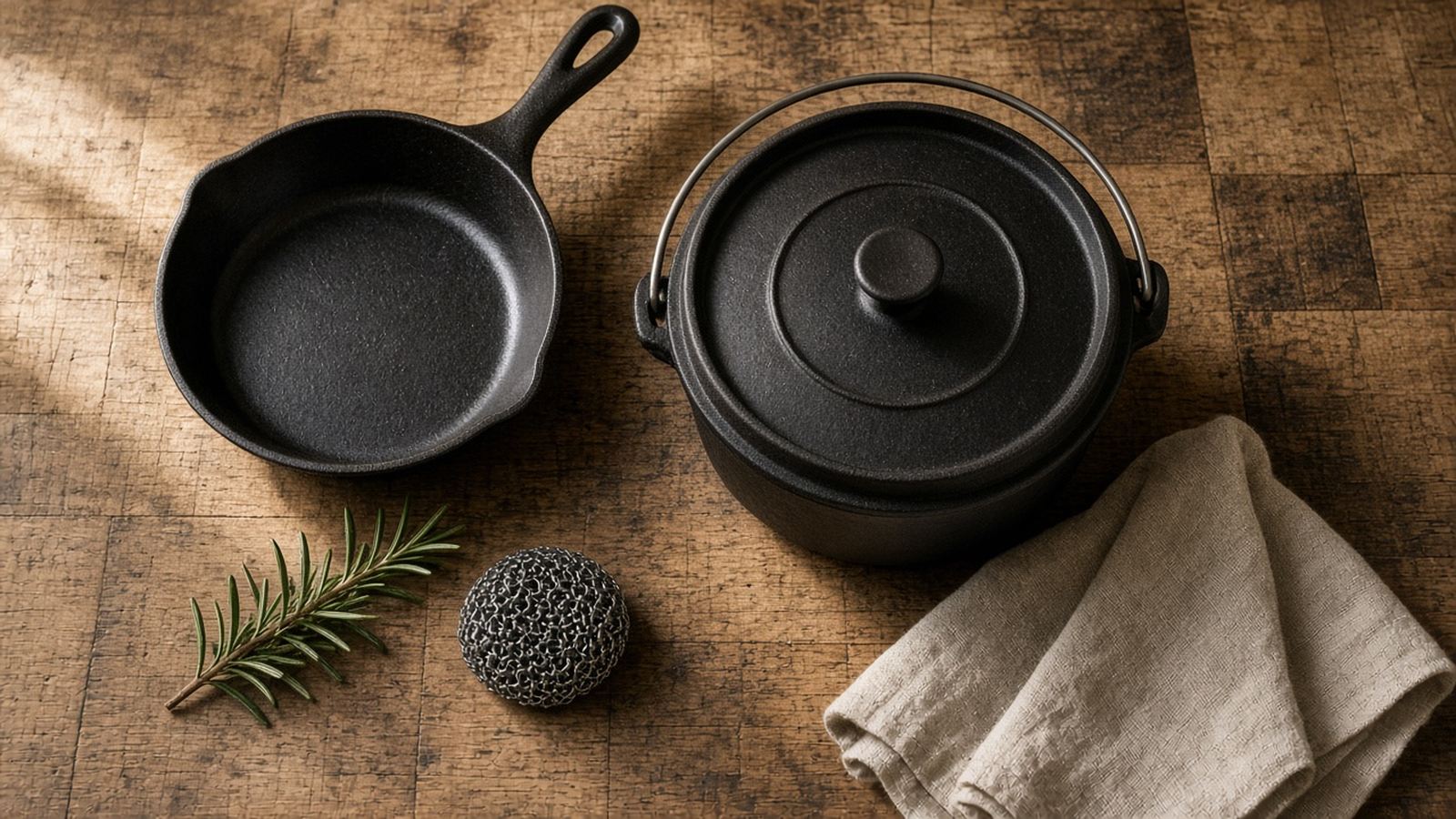
Featured Gear in This Guide
A short list for this chore. No prices, because those change. The button is a paid link.
-
Check on Amazon (paid link)
Lodge Pre-Seasoned Cast Iron Skillet, 10.25 Inches
Lodge
Best for Daily all-purpose skillet
-
Check on Amazon (paid link)
Lodge Pre-Seasoned Cast Iron Dutch Oven with Bail Handle, 5 Quart
Lodge
Best for Stews, bread, and campfire
-
Check on Amazon (paid link)
Knapp Made CM Scrubber 6 x 6 Small Ring Chainmail Scrubber
Knapp Made
Best for Cleaning without stripping seasoning
-
Check on Amazon (paid link)
Lodge Silicone Hot Handle Holder, Black
Lodge
Best for Safer stovetop handling
-
Check on Amazon (paid link)
SunnyPoint Heavy Duty Pan Organizer Rack
SunnyPoint
Best for Cabinet storage without stacking
There is a reason cast iron keeps showing up in farmhouse kitchens generation after generation. It is not fussy, it does not wear out, and it gets better the more you use it. A skillet that fries eggs on a Tuesday morning can go straight into the oven for cornbread that evening, then out to the fire pit on the weekend. What trips people up is not the cooking. It is the care, the handling, and the storage. Pans get rusty because they were left to soak. Handles get grabbed bare-handed. Heavy pans get stacked until the bottom one chips the enamel on something else.
This starter kit fixes all of that with five pieces. Two are cookware you will use daily, and three are small, inexpensive helpers that make living with cast iron easy instead of intimidating.
What to look for before you buy any cast iron
Weight and wall thickness. Thicker walls hold heat longer and even out hot spots, which is what gives you that deep sear. The trade-off is weight. A standard 10-inch skillet is manageable for most cooks one-handed with a helper handle; a 12-inch pan usually needs two hands when it is full.
Pre-seasoning. Nearly every modern pan arrives with a factory coat of baked-on oil. It is a starting point, not a finished surface. Plan to cook a few fatty meals (bacon, shallow-fried potatoes, seared burgers) in the first couple of weeks and the surface will darken and slicken quickly.
Surface texture. Vintage pans were machined smooth; most new pans have a slightly pebbly finish. That texture is fine. It fills in as seasoning builds, and it does not affect how food releases once the pan is broken in.
Size that matches your household. For one to three people, a 10-inch skillet and a 5-quart Dutch oven cover nearly everything. Larger families or folks feeding a ranch crew may want a 12-inch skillet as a second pan later.
The 5-piece everyday kit
1. The workhorse skillet: Lodge 10.25-Inch Cast Iron Skillet
If you only own one piece of cast iron, this is the one. The 10-inch size fits a standard burner, handles four eggs or two steaks, and is light enough to flip hash browns without straining your wrist. It has a pour spout on each side for draining grease and a small helper handle opposite the main one, which matters more than you would think when you are pulling it from a 450-degree oven.
Why we like it: It is made in the USA, it is about as close to indestructible as kitchen gear gets, and it is easy to find replacement accessories that fit it. Trade-offs: The factory seasoning is serviceable but thin. Expect a little sticking with eggs for the first few weeks.
Check current price on Amazon (paid link)
2. The Sunday-supper pot: Lodge 5-Quart Cast Iron Dutch Oven
A bare cast iron Dutch oven is the pot you reach for when something needs to simmer for hours: chili, pot roast, beans, or a no-knead loaf of bread. The 5-quart size feeds four to six people and still fits in a standard oven with room for the lid. The wire bail handle means it can hang over a campfire tripod, which makes it a natural fit for anyone who cooks outdoors during cattle work or camping trips.
Why we like it: Unlike enameled pots, there is no coating to chip, so you can use metal utensils and set it directly on coals. Trade-offs: Acidic dishes like tomato sauce can dull new seasoning if simmered for hours. Cook a few rich, fatty meals in it first.
Check current price on Amazon (paid link)
3. The cleaning tool that saves your seasoning: Knapp Made Chainmail Scrubber
The single biggest cause of ruined cast iron is aggressive cleaning: steel wool, the dishwasher, or a long soak in the sink. A chainmail scrubber knocks off stuck bits with hot water and a little elbow grease while leaving the seasoning intact. Knapp Made uses small stainless rings, which reach into the corners where the pan wall meets the bottom.
Why we like it: It lasts essentially forever, and it can go in the dishwasher even though the pans cannot. Trade-offs: It is not a sponge. You will still want a soft cloth to wipe away loosened residue.
Check current price on Amazon (paid link)
4. The burn preventer: Lodge Silicone Hot Handle Holder
Cast iron handles get every bit as hot as the cooking surface. A slip-on silicone sleeve gives you a grip on the stovetop without hunting for a towel. It fits Lodge keyhole-style handles on skillets nine inches and larger.
Why we like it: It is cheap insurance against a painful mistake, especially in a busy kitchen with kids underfoot. Trade-offs: Take it off before the pan goes into the oven. Silicone sleeves are meant for stovetop handling, not for baking.
Check current price on Amazon (paid link)
5. The cabinet fix: SunnyPoint Heavy Duty Pan Organizer Rack
Stacking cast iron is how seasoning gets scratched and how lower cabinet shelves start to sag. A steel pan rack lets you stand skillets on edge, or turn it on its side and lay pans flat on individual rungs. Measure your tallest skillet and your cabinet depth before ordering; the fixed spacing works best for skillets, griddles, and lids rather than tall pots.
Why we like it: It turns a jumbled cabinet into a grab-and-go system and keeps pans from rubbing together. Trade-offs: The Dutch oven usually lives better on its own shelf or on the stovetop.
Check current price on Amazon (paid link)
A simple care routine that actually sticks
- Clean while warm. Rinse with hot water and use the chainmail scrubber. A drop of mild dish soap is fine on modern seasoning; just do not soak.
- Dry completely. Towel it off, then set it on a low burner for a minute or two until every bit of moisture is gone.
- Oil lightly. Rub in a few drops of a neutral cooking oil with a paper towel, then wipe until the pan looks almost dry. Too much oil turns sticky.
- Store dry and separated. Use the rack, and if you live somewhere humid, slip a paper towel inside the Dutch oven with the lid slightly ajar.
Common mistakes to avoid
- Letting it soak overnight. Rust can start in hours. If you find orange spots, scrub them out, dry the pan, and re-oil. It is fixable.
- Overdoing the oil. A thick coat does not bake into seasoning; it turns gummy. Thin layers win.
- Cooking only lean, wet foods at first. Simmered tomato sauces and boiled vegetables will not build seasoning. Start with fats and sears.
- Grabbing the handle bare-handed. Every cast iron owner does this once. The handle holder keeps it to once.
The bottom line
Start with the skillet and the scrubber. Add the Dutch oven when you are ready for slow-cooked meals and bread, and pick up the handle holder and rack as your collection grows. Five pieces, cared for simply, will outlast every nonstick pan you have ever owned, and there is a good chance someone in your family will be cooking in them decades from now.
Related guides
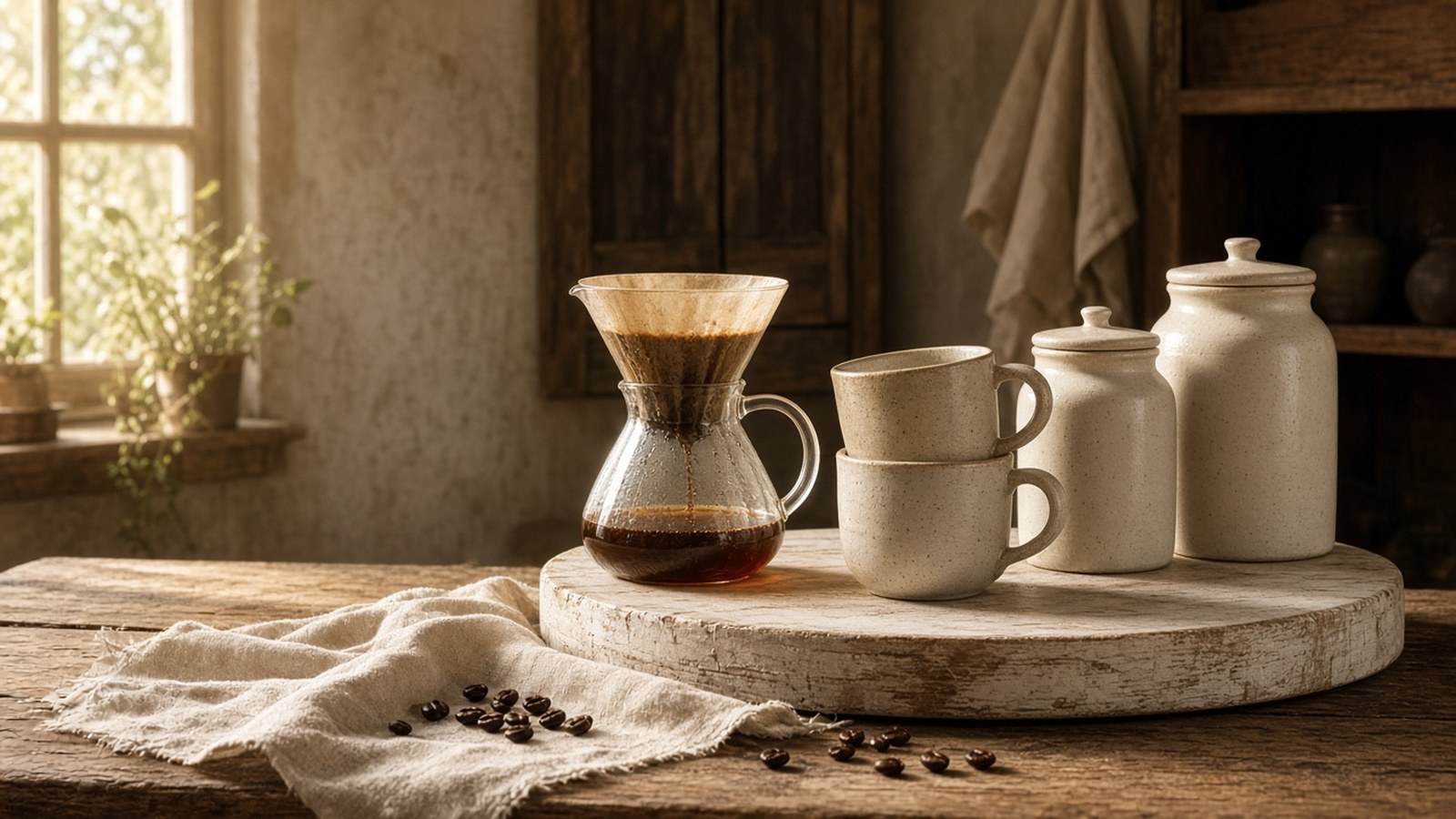
How to Set Up a Clutter-Free Farmhouse Coffee Bar That Works on Busy Mornings
Build a calm, functional coffee corner with a pour-over brewer, a conical burr grinder, a gooseneck kettle, airtight canisters, and a wood riser that keeps the counter tidy.
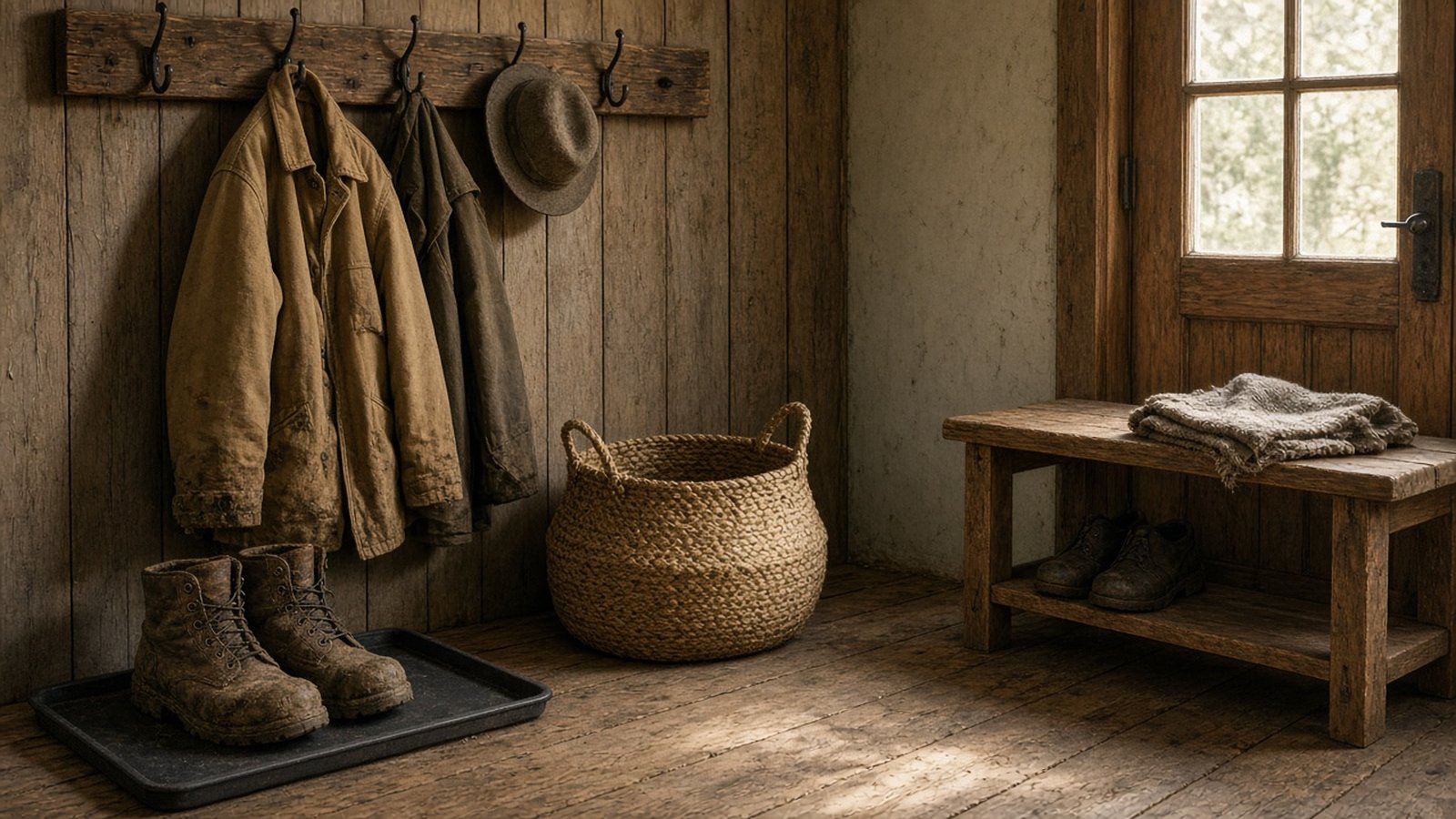
Mudroom & Entryway Organization for Boots, Coats & Ranch Dust
Stop the mud at the door with a rubber boot tray, a sturdy coat rack, a storage bench, woven baskets, and a cast iron boot jack that makes pulling off work boots easy.
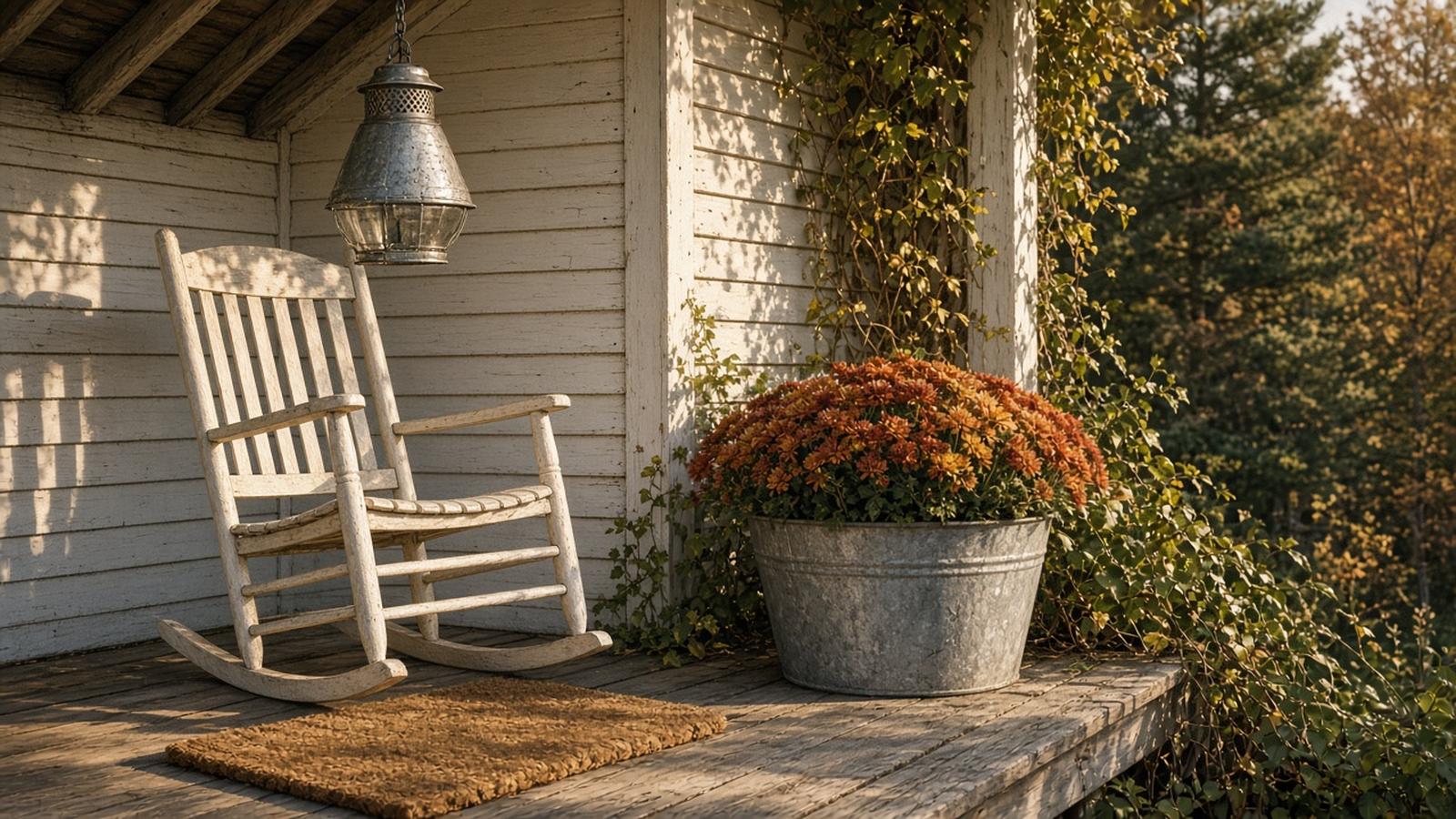
Country Front Porch Upgrades Built for Real Weather
Refresh a country front porch with pieces that survive sun, wind, and wet boots: an all-weather rocker, a solar lantern, a coir doormat, a galvanized planter, and outdoor pillow covers.