How to Set Up a Clutter-Free Farmhouse Coffee Bar That Works on Busy Mornings
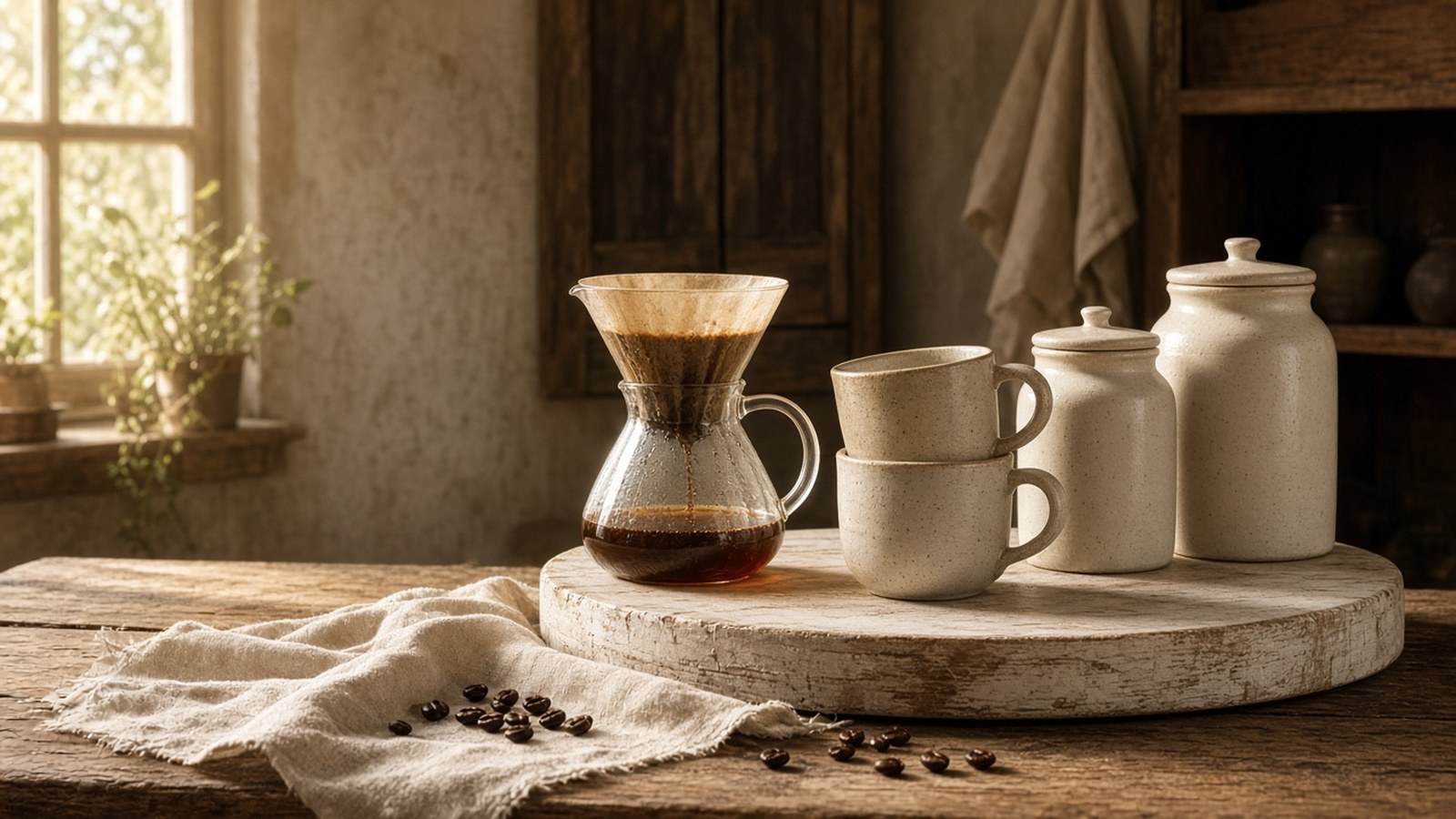
Featured Gear in This Guide
A short list for this chore. No prices, because those change. The button is a paid link.
-
Check on Amazon (paid link)
Chemex Pour-Over Glass Coffeemaker, Classic Series, 8-Cup
Chemex
Best for Clean, bright pour-over pots
-
Check on Amazon (paid link)
OXO Brew Conical Burr Coffee Grinder
OXO
Best for Consistent everyday grind
-
Check on Amazon (paid link)
Fellow Stagg EKG Pro Studio Electric Gooseneck Kettle
Fellow
Best for Precise pour and temperature
-
Check on Amazon (paid link)
Park Designs Rustic Retreat Stoneware 3-Piece Canister Set
Park Designs
Best for Airtight farmhouse storage
-
Check on Amazon (paid link)
Tikea Round Wood Riser, Farmhouse Display Tray, 10 Inch
Tikea
Best for Corralling counter clutter
On a working property, mornings start early and they start fast. Horses need feeding, dogs need letting out, and somebody always needs to find their keys. A coffee bar is not a luxury in that setting; it is a little station that lets the most important ritual of the day happen without hunting through three cabinets. Done well, it looks like a farmhouse catalog photo. Done poorly, it is a pile of mugs, a bag of beans with a chip clip, and a coffee maker crowding the cutting board.
Here is how to build one that stays clean and works every single day, plus the five pieces we would put on it.
Start with the layout, not the gear
Before buying anything, pick a spot that has three things:
- An outlet within reach for a grinder and a kettle.
- About two to three feet of counter (or a small cart or sideboard) that is not in the main cooking path.
- A nearby water source, or at least a short walk to the sink so you are not carrying a full kettle across the room.
Then think in zones. Left to right, most people work best with beans → grinder → brewer → mugs. Keep the things you touch every day at the front and the backup supplies (filters, extra beans, syrups) up on a riser or in a canister behind.
Brewing method: why pour-over fits the farmhouse look
A big programmable drip machine is convenient, but it is also the bulkiest thing on the counter. A glass pour-over pot takes up less room, has no buttons to break, and makes a noticeably cleaner cup. The trade-off is that you stand there for about four minutes while it brews. For a lot of people, those four quiet minutes before the chores start become the best part of the day.
If you are brewing for a full house every morning, a thermal-carafe drip machine is still the smarter choice. Buy for how you actually live.
The 5-piece coffee bar
1. The brewer: Chemex Classic 8-Cup Pour-Over
The hourglass glass shape with the wood collar and leather tie has been around for decades, and it suits a farmhouse kitchen perfectly. The thick bonded paper filters catch more oils than a mesh cone, so the coffee is bright and clean with no sludge at the bottom of the cup. The 8-cup size makes about four mugs, which is right for a couple or a small family.
Why we like it: No electronics, nothing to descale, and it doubles as a serving carafe. Trade-offs: It is glass, so handle it carefully, and you will need its specific filters rather than standard cone filters.
Check current price on Amazon (paid link)
2. The grinder: OXO Brew Conical Burr Grinder
Pre-ground coffee goes stale quickly once the bag is open. A burr grinder crushes beans to a consistent size, which is the single biggest upgrade you can make to the taste of your coffee. Conical burrs run slower and cooler than blade grinders, and the OXO has a wide range of settings from fine to coarse, so it covers pour-over, drip, and French press with one machine.
Why we like it: One-touch grinding that remembers your last setting, and a hopper big enough to hold most of a bag of beans. Trade-offs: It is not built for true espresso fineness. Static can make grounds cling to the bin in dry winter air; a quick tap usually solves it.
Check current price on Amazon (paid link)
3. The kettle: Fellow Stagg EKG Pro Studio Gooseneck
Pour-over rewards a slow, controlled stream of water, and a gooseneck spout is what makes that possible. This kettle also lets you set an exact temperature and hold it, which matters for both coffee and tea. The matte finish and slim profile look good on a wood counter.
Why we like it: Precise control and a hold mode so the water is ready when you walk back in from the barn. Trade-offs: It is a heirloom-tier pick. If you only drink one cup a day, a simple stovetop gooseneck kettle does the core job.
Check current price on Amazon (paid link)
4. The storage: Park Designs Rustic Retreat Stoneware Canisters
Coffee's enemies are air, light, and moisture. Opaque stoneware canisters with sealed lids solve all three while giving the station that farmhouse character. Use the large one for whole beans, the medium for sugar, and the small for tea bags or cocoa.
Why we like it: Heavy, stable, and they look like something handed down instead of something bought. Trade-offs: Stoneware is heavier and more breakable than plastic, so keep them back from the counter edge.
Check current price on Amazon (paid link)
5. The organizer: Tikea Round Wood Riser
A riser is the trick that makes a coffee bar look intentional. It lifts canisters and syrups up off the counter, which creates a second level and frees the space underneath for a small stack of mugs or a dish of spoons. This 10-inch round riser has a raised lip so small things do not roll off, screw-on legs you can leave off for a flat tray, and comes in black, brown, or white to suit your palette.
Why we like it: It instantly organizes a cluttered corner, and you can redecorate it for each season. Trade-offs: It is lightweight wood, so it is best for canisters and small items rather than the full weight of a kettle. Wipe drips quickly to avoid water rings.
Check current price on Amazon (paid link)
Keeping it clean (the part nobody talks about)
- Weekly: Brush out the grinder chute and burrs with a dry brush. Wash the brewer with warm, soapy water and a long bottle brush.
- Monthly: Descale the kettle with a vinegar and water solution or a citric-acid descaler, especially if you have hard well water.
- Seasonally: Edit the riser. Pull anything you have not used in a month and put it away.
Common mistakes to avoid
- Storing beans in the freezer and thawing them daily. Condensation ruins them. Freeze only long-term backup bags.
- Buying more gadgets than counter. A milk frother, a scale, a timer, and a second brewer add up fast. Start with five pieces and add only what you use weekly.
- Grinding everything at once. Grind right before you brew. It takes thirty seconds and makes a real difference.
The bottom line
A great farmhouse coffee bar is less about how much you own and more about how little you have to move to make a cup. A pour-over brewer, a good grinder, a gooseneck kettle, sealed canisters, and a riser to pull it all together will give you a calm, good-looking station that gets you out the door to the chores with a decent cup in your hand.
Related guides
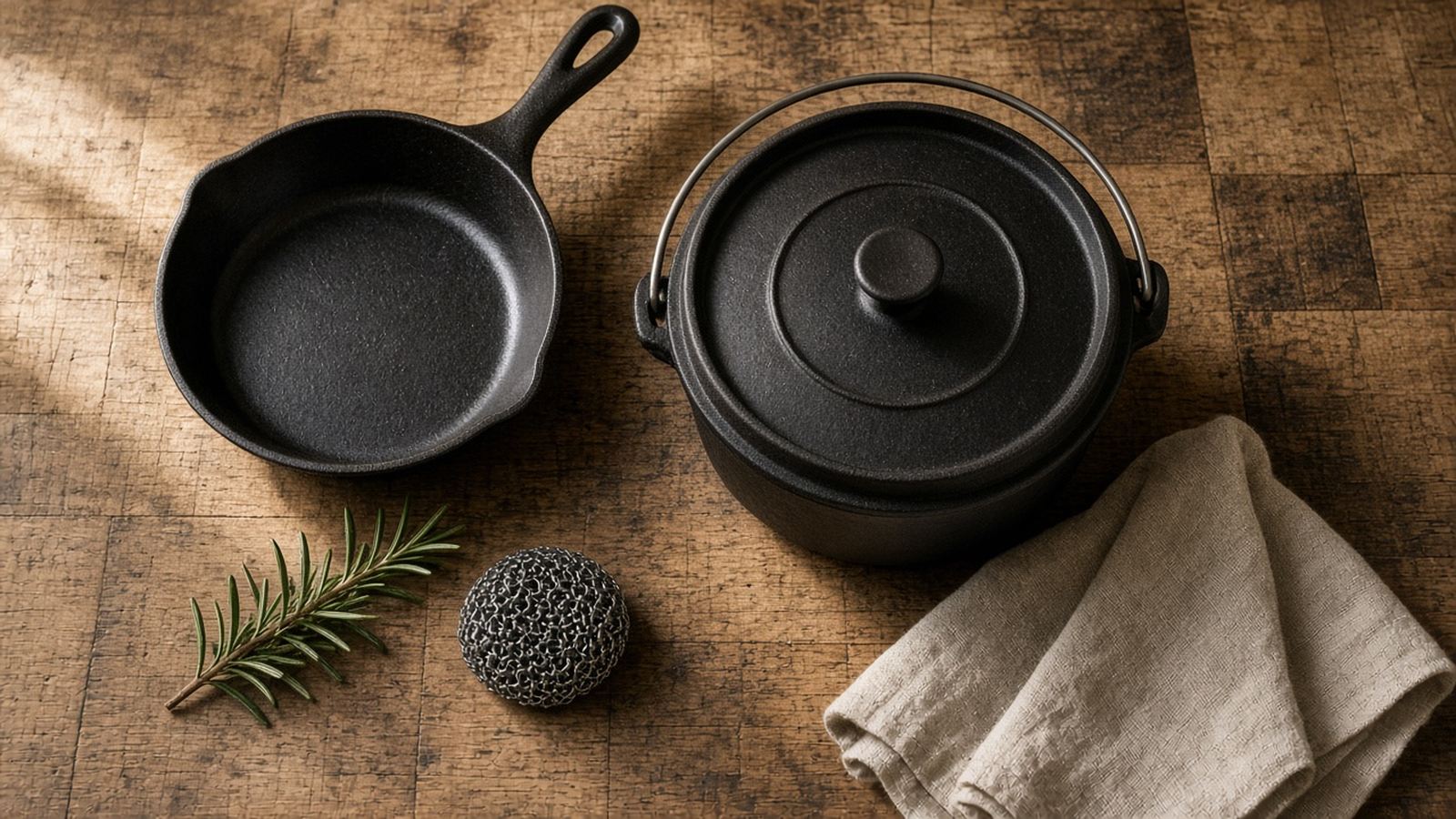
The Everyday Cast Iron Starter Kit: 5 Heirloom Pieces Worth Keeping on Your Stove
A practical starter kit for cooking with cast iron every day: the skillet, the Dutch oven, and the three small tools that keep both seasoned, safe to handle, and neatly stored.
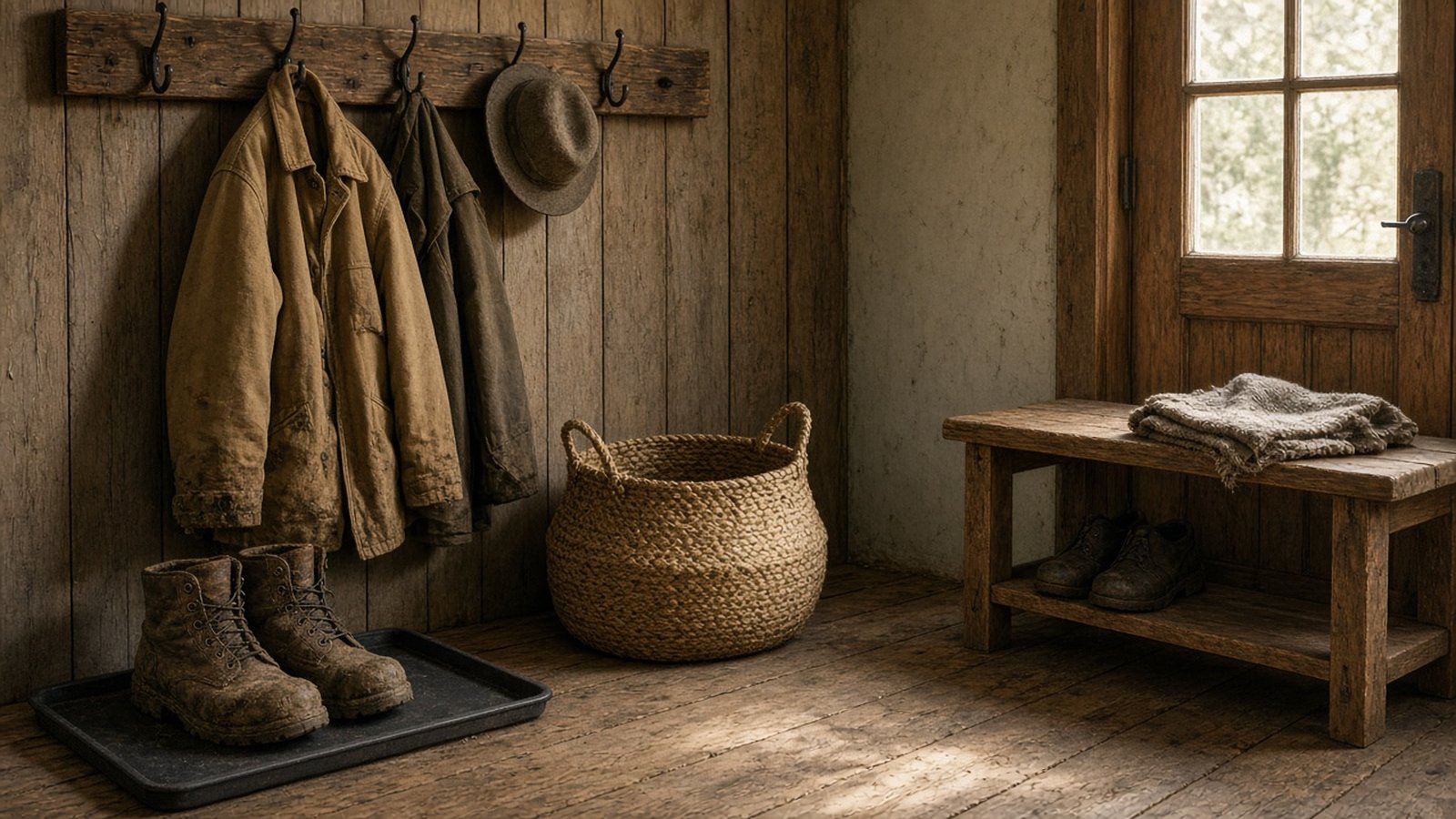
Mudroom & Entryway Organization for Boots, Coats & Ranch Dust
Stop the mud at the door with a rubber boot tray, a sturdy coat rack, a storage bench, woven baskets, and a cast iron boot jack that makes pulling off work boots easy.
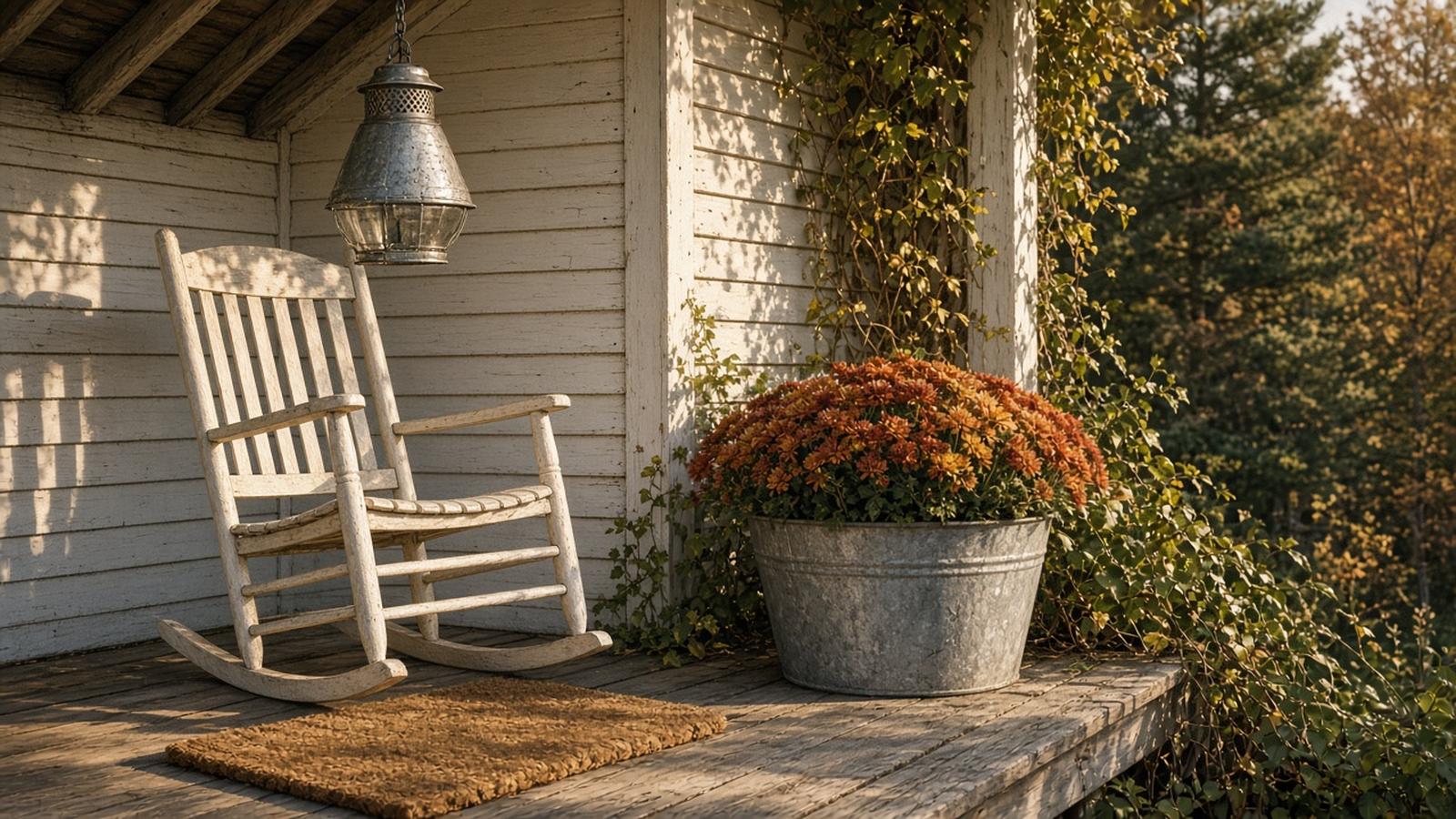
Country Front Porch Upgrades Built for Real Weather
Refresh a country front porch with pieces that survive sun, wind, and wet boots: an all-weather rocker, a solar lantern, a coir doormat, a galvanized planter, and outdoor pillow covers.