Country Front Porch Upgrades Built for Real Weather
Featured Gear in This Guide
A short list for this chore. No prices, because those change. The button is a paid link.
-
Check on Amazon (paid link)
POLYWOOD Presidential Outdoor Rocking Chair
POLYWOOD
Best for Rot-proof porch seating
-
Check on Amazon (paid link)
Icerona Metal Hanging Solar Lantern
Icerona
Best for Wire-free evening glow
-
Check on Amazon (paid link)
Kempf Black Border Coir Doormat, 30 x 48
Kempf
Best for Scraping off mud
-
Check on Amazon (paid link)
Behrens 3GS 17 Gallon Round Galvanized Steel Tub
Behrens
Best for Rustic planter or cooler
-
Check on Amazon (paid link)
HPUK Outdoor Waterproof Throw Pillow Covers, 18 x 18, Set of 2
HPUK
Best for Seasonal color swap
A country front porch is not a showroom. It gets afternoon sun that fades fabric, sideways rain that soaks anything left out, wind that tosses lightweight furniture into the yard, and a steady parade of muddy boots and wet dogs. Plenty of pretty porch decor looks great for one season and then cracks, rusts, or mildews. The trick to a porch that still looks good in five years is choosing materials that were built for weather in the first place.
Here is what we look for and the five pieces that make the biggest difference.
Materials that hold up outside
- HDPE lumber (recycled plastic): Does not rot, splinter, or need paint. Heavy enough to stay put in wind.
- Powder-coated aluminum and stainless steel: Light but rust-resistant. Good for lanterns and small tables.
- Galvanized steel: The zinc coating resists rust for years and develops a soft gray patina that suits farmhouses.
- Coir (coconut fiber): Coarse, scrapes mud well, and is naturally tough. Best on a covered porch where it can dry out.
- Solution-dyed or coated polyester fabric: Resists fading and repels water far better than cotton.
What to avoid: untreated softwood, thin plastic resin chairs, and indoor cotton pillows. They will not survive a full year outside.
The 5-piece porch refresh
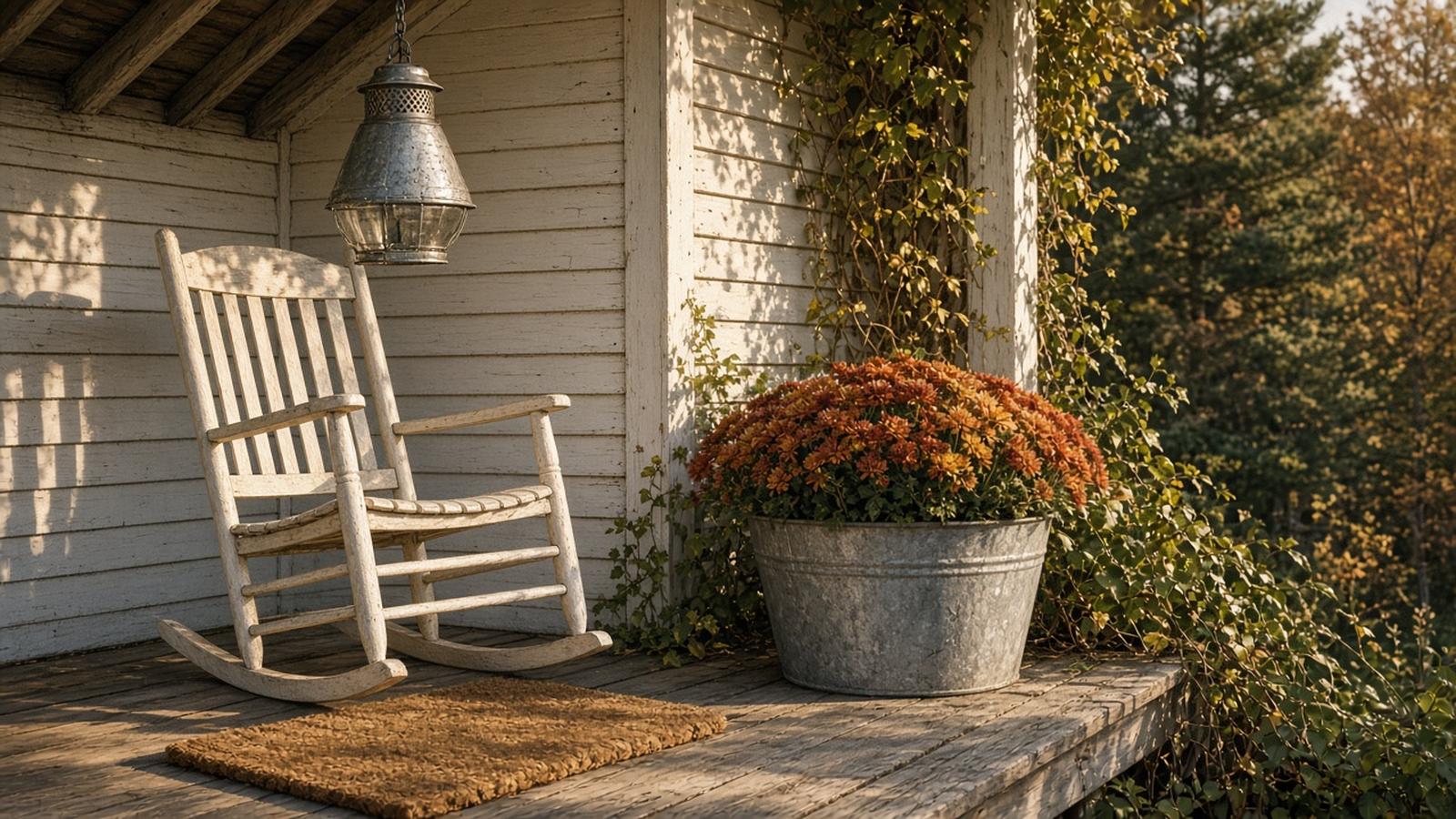
1. The anchor: POLYWOOD Presidential Rocking Chair
Nothing says front porch like a rocking chair, and nothing ruins one faster than weather. Wood rockers need sanding and sealing every couple of years. POLYWOOD chairs are made from solid HDPE lumber that looks like painted wood but never needs paint, does not absorb water, and is heavy enough that a strong gust will not send it across the porch. The classic slat-back design suits a farmhouse or ranch-style home.
Why we like it: A true buy-once piece. Hose it off in spring and it looks new. Trade-offs: It is an heirloom pick, and it is heavy, so plan on two people to carry it up the steps. Dark colors get warm in direct summer sun.
Check current price on Amazon (paid link)
2. The evening light: Icerona Metal Hanging Solar Lantern
Hard-wiring a new porch light is a project. A good solar lantern is not. Hang it from a hook on a post or set it on a side table and it charges during the day and glows on its own at dusk. Look for a metal frame, a weather rating, and a warm white light rather than the cold blue of cheap solar stakes.
Why we like it: No wiring, no switches, and a soft glow that makes the porch inviting after dark. Trade-offs: Solar lanterns are ambient lighting, not security lighting. They also need a few hours of direct sun; a fully shaded porch will cut runtime.
Check current price on Amazon (paid link)
3. The mud stopper: Kempf Coir Doormat
Coir fibers are stiff and scratchy, which is exactly what you want for knocking caked mud off boot soles before it hits the boot tray inside. A non-slip vinyl backing keeps it from sliding when someone stomps across it in a hurry. The 30-by-48-inch size covers a standard front door with room for both feet.
Why we like it: It scrapes better than any rubber or synthetic mat and looks classic. Trade-offs: Coir sheds a little at first. Do not leave it in standing water; on an uncovered stoop, pair it with a rubber mat underneath for drainage.
Check current price on Amazon (paid link)
4. The rustic planter: Behrens 17-Gallon Galvanized Tub
A galvanized tub is the most versatile thing you can put on a farmhouse porch. Drill a few drainage holes and it is a big planter for mums in fall and herbs in spring. Leave it solid and it becomes a drink cooler for a summer cookout or a place to stash kindling by the door. The riveted side handles make it easy to move.
Why we like it: Made in the USA, nearly indestructible, and it only looks better as it weathers. Trade-offs: Metal heats up in direct sun, so choose heat-tolerant plants or line the inside with a nursery pot. Drill holes before planting.
Check current price on Amazon (paid link)
5. The seasonal touch: HPUK Outdoor Waterproof Pillow Covers
Swapping pillow covers is the cheapest way to change the look of a porch with the seasons. Using covers instead of whole pillows means you can keep one set of outdoor inserts and store a stack of covers in a drawer. Water-repellent polyester shrugs off a passing shower, and hidden zippers keep the look clean.
Why we like it: An easy, low-commitment way to bring in seasonal color. Trade-offs: Inserts are not included; buy outdoor-rated inserts that will not hold water. Bring pillows inside during long stretches of rain.
Check current price on Amazon (paid link)
Keep it looking good season to season
- Spring: Hose down the rocker, wash pillow covers, and refresh the planter soil.
- Summer: Move the lantern to the sunniest hook and rotate pillows so they fade evenly.
- Fall: Plant mums or ornamental kale in the tub, and shake out the coir mat weekly once leaves start dropping.
- Winter: Store pillow covers indoors, tip the galvanized tub so it does not fill with ice, and leave the rocker out. It can take it.
Common mistakes to avoid
- Buying lightweight furniture for a windy porch. If you can lift it with one finger, the wind can too.
- Using indoor decor outside. Cotton, unsealed wood, and painted metal fail fast.
- Overcrowding. One or two rockers, a small table, a planter, and a light are plenty. Leave room to walk to the door with a bag of feed.
The bottom line
A great country porch does not need a lot of things. It needs the right materials. Start with a rocker that will never rot, add a solar lantern for easy evening light, put down a coir mat that actually scrapes mud, fill a galvanized tub with whatever is in season, and finish with weatherproof pillow covers you can change when the mood strikes. You will spend your time sitting on the porch instead of maintaining it.
Related guides

The Everyday Cast Iron Starter Kit: 5 Heirloom Pieces Worth Keeping on Your Stove
A practical starter kit for cooking with cast iron every day: the skillet, the Dutch oven, and the three small tools that keep both seasoned, safe to handle, and neatly stored.

How to Set Up a Clutter-Free Farmhouse Coffee Bar That Works on Busy Mornings
Build a calm, functional coffee corner with a pour-over brewer, a conical burr grinder, a gooseneck kettle, airtight canisters, and a wood riser that keeps the counter tidy.
Mudroom & Entryway Organization for Boots, Coats & Ranch Dust
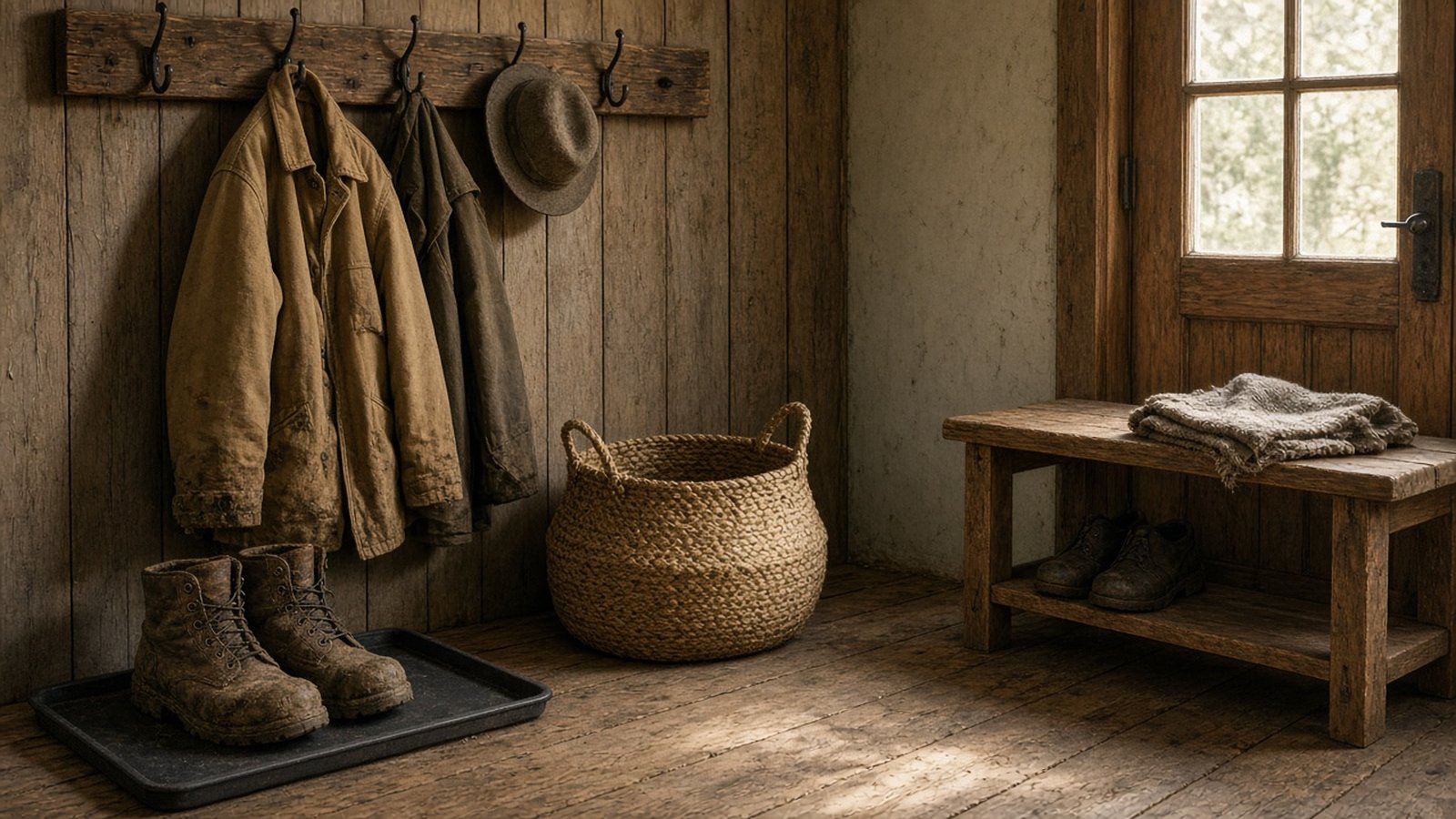
Stop the mud at the door with a rubber boot tray, a sturdy coat rack, a storage bench, woven baskets, and a cast iron boot jack that makes pulling off work boots easy.