Winter Barn & Turnout Prep Essentials for Cold Weather
Featured Gear in This Guide
A short list for this chore. No prices, because those change. The button is a paid link.
-
Check on Amazon (paid link)
Horze Nevada Medium Weight 1200D Waterproof Turnout Blanket
Horze
Best for Wet, cold turnout days
-
Check on Amazon (paid link)
Farm Innovators Heated Flat-Back Water Bucket, 5 Gallon
Farm Innovators
Best for Ice-free stall water
-
Check on Amazon (paid link)
K&H Stock Tank Deicer, 1500W, Floating or Submersible
K&H Pet Products
Best for Open water in pastures
-
Check on Amazon (paid link)
Weaver Equine Slow Feed Hay Net, 36 Inch
Weaver Equine
Best for Longer forage time
-
Check on Amazon (paid link)
SHOWA TEMRES 282 Waterproof Insulated Winter Work Gloves
SHOWA
Best for Warm, dry chore hands
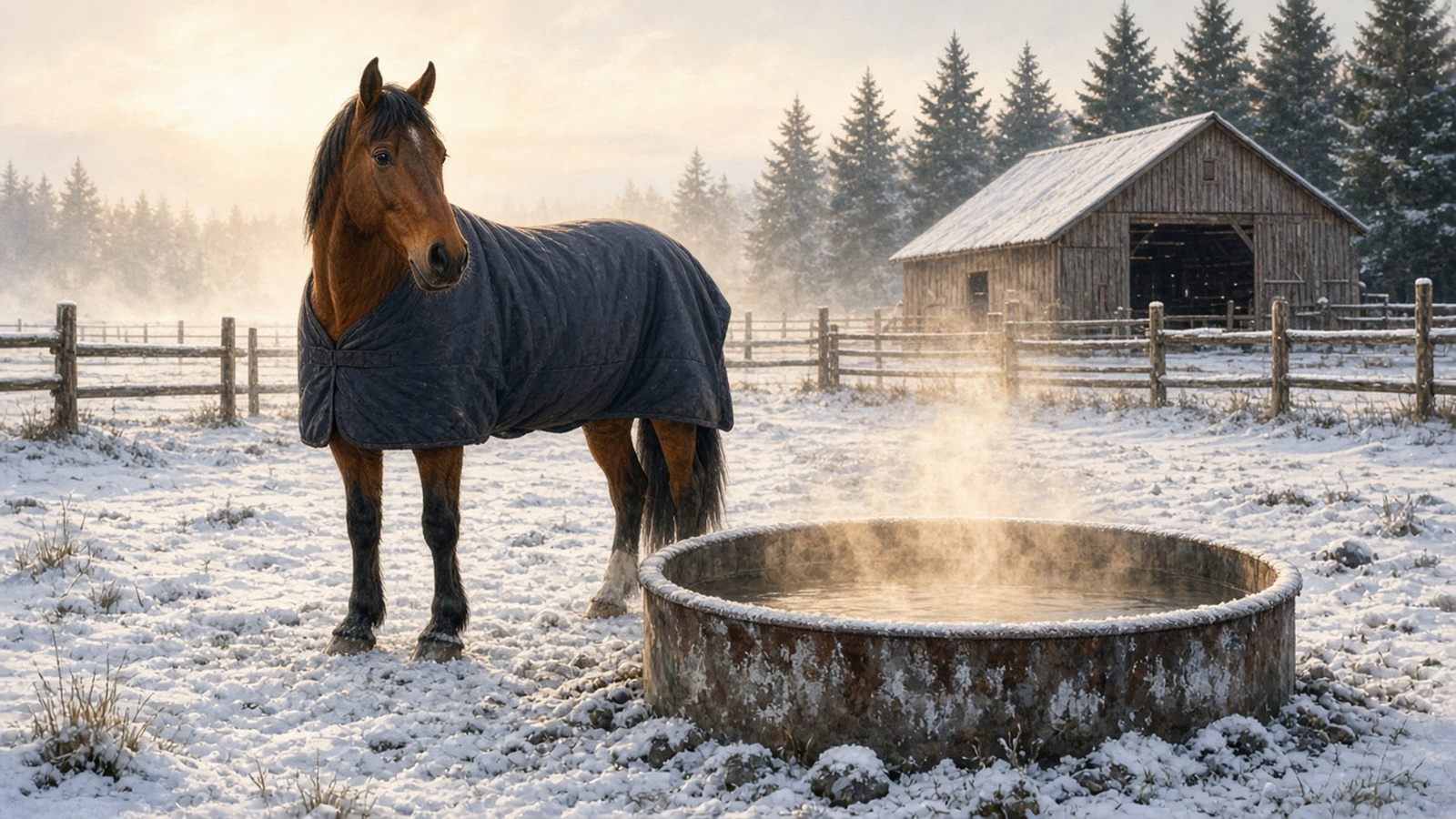
Horses handle cold better than most people assume. A healthy horse with a full winter coat, free access to forage, and unfrozen water can be comfortable well below freezing. What actually causes trouble in winter is not the temperature itself. It is frozen water that horses stop drinking, wet coats that lose their insulating loft in cold rain, and too little hay to fuel the internal furnace. The chores that prevent those problems are a lot easier with the right gear, and a lot more miserable with cold, wet hands.
Here is how we prep for winter and the five pieces we would not go without.
The winter priorities, in order
- Water. Horses drink less when water is near freezing, and dehydration is a leading contributor to impaction colic in winter. Keeping water open and slightly above freezing is the single most important winter job.
- Forage. Digesting hay generates body heat. Free-choice or frequent hay is better than more grain.
- Shelter from wind and wet. A run-in shed or windbreak matters more than a closed barn for many horses.
- Blanketing when needed. Clipped horses, older horses, hard keepers, and horses without shelter in cold rain benefit most.
The 5 winter barn essentials
1. The weather shield: Horze Nevada Medium Weight Turnout Blanket
A wet horse in a cold wind loses heat quickly, because soaked hair flattens and stops trapping air. A waterproof, breathable turnout blanket keeps the coat dry and lofted. Medium weight (around 200 grams of fill) is the most versatile option for many climates, warm enough for freezing rain without overheating on a mild sunny afternoon. A tough 1200-denier shell stands up to fence posts and pasture buddies.
Why we like it: Waterproof shell, sensible medium fill, and a wide range of sizes. Trade-offs: Blankets flatten the natural coat over time, so a blanketed horse depends on staying blanketed. Check under it daily for rubs and sweat, and remove it on warm days.
Check current price on Amazon (paid link)
2. The stall water fix: Farm Innovators Heated Flat-Back Bucket
Chipping ice out of stall buckets twice a day gets old fast, and horses drink noticeably more when the water is not ice-cold. A thermostatically controlled heated bucket only turns on when it needs to, and a flat back hangs flush against the stall wall. Look for a cord protector so curious horses cannot chew it.
Why we like it: Simple, energy-efficient, and it solves the most common winter stall problem. Trade-offs: You need a safe, protected outlet near each stall. Route cords outside the stall where horses cannot reach them, and follow the manufacturer's cord guidance.
Check current price on Amazon (paid link)
3. Open water in the pasture: K&H Stock Tank Deicer
For horses on turnout, a stock tank de-icer keeps a drinking hole open even on bitter nights. This model can float or be used submerged, comes with a full protective cage and a cord clip, and is designed for plastic, rubber, and metal tanks, which is not true of every de-icer. A built-in thermostat means it only runs when the water is near freezing, and it comes in several wattages so you can match it to your tank size and climate.
Why we like it: Versatile, caged, and suitable for the plastic and rubber tanks many small farms use. Trade-offs: Electric de-icers draw significant power. The manufacturer calls for a grounded, GFCI-protected outdoor outlet right next to the tank and no extension cords, so plan your outlet before winter. The heating element must stay under water, so check the tank level daily.
Check current price on Amazon (paid link)
4. More chewing, less waste: Weaver Equine Slow Feed Hay Net
When horses eat hay faster than it can be refilled, they spend more hours standing around with an empty stomach, and that is exactly when they get cold, bored, and prone to ulcers. Small-hole hay nets slow them down so a flake lasts hours instead of minutes, and they cut the hay that gets trampled into mud and wasted.
Why we like it: Small openings for slower eating at an accessible, entry-level investment. Trade-offs: Hang nets high enough that a pawing hoof cannot get caught, especially for shod horses. Introduce slowly so horses do not get frustrated.
Check current price on Amazon (paid link)
5. Hands that work: SHOWA TEMRES 282 Insulated Gloves
Winter chores are mostly wet chores: filling buckets, scrubbing tanks, handling snowy hay. Ordinary work gloves soak through in minutes. These are fully waterproof with a fleece liner, yet still flexible enough to work a buckle, a gate chain, or a hose fitting. Many barn folks swear by them for exactly that reason.
Why we like it: Truly waterproof, warm, and grippy, with enough dexterity to do real work. Trade-offs: They run small, so size up. They are not designed for heavy welding or sharp-edged materials.
Check current price on Amazon (paid link)
Winter routine checklist
- Every morning and evening: Check water is open, check heaters are working, and look at each horse's manure and attitude.
- Daily: Run a hand under every blanket at the withers and shoulders to check for sweat or rubs.
- Weekly: Inspect cords and outlets for chew marks or damage; clean tank algae and debris.
- Before a storm: Stock extra hay in reach, top off tanks, and have a backup plan for water if the power goes out.
Common mistakes to avoid
- Overblanketing. A sweating horse under a heavy blanket gets colder once the sweat chills. Blanket for the conditions, not for how cold you feel.
- Relying on snow as water. Horses cannot eat enough snow to stay hydrated.
- Running water heaters off extension cords. Many tank and bucket heaters call for a dedicated, grounded GFCI outlet. Have an electrician add one if needed rather than daisy-chaining cords.
- Feeding more grain instead of more hay. Forage is what keeps them warm.
The bottom line
Winter horse care comes down to open water, plenty of forage, and protection from wind and wet. A good turnout blanket, a heated bucket, a reliable tank de-icer, a slow-feed hay net, and a pair of gloves that keep your hands working will make the cold months safer for your horses and a lot more bearable for you.
Related guides
Horse Trailer Safety & Road-Trip Hauling Checklist
A practical pre-trip checklist for hauling horses safely, plus four pieces of gear that help: a wireless trailer camera, rubber wheel chocks, a coupler lock, a slow-feed hay bag, and a flat-tire plan.
Practical Tack Room Organization for Saddles, Bridles & Blankets
Turn a cramped tack room into an organized, easy-to-clean space with a folding saddle rack, a multi-hook bridle rack, a swinging blanket bar, a latching grooming box, and a breathable pad bag.
Everyday Barn Grooming Tote Essentials That Actually Last
Build a no-fuss grooming kit that covers daily care: a stiff dandy brush, a soft finishing brush, a rubber curry, a hoof pick with brush, and a tough tote to carry it all.