Horse Trailer Safety & Road-Trip Hauling Checklist
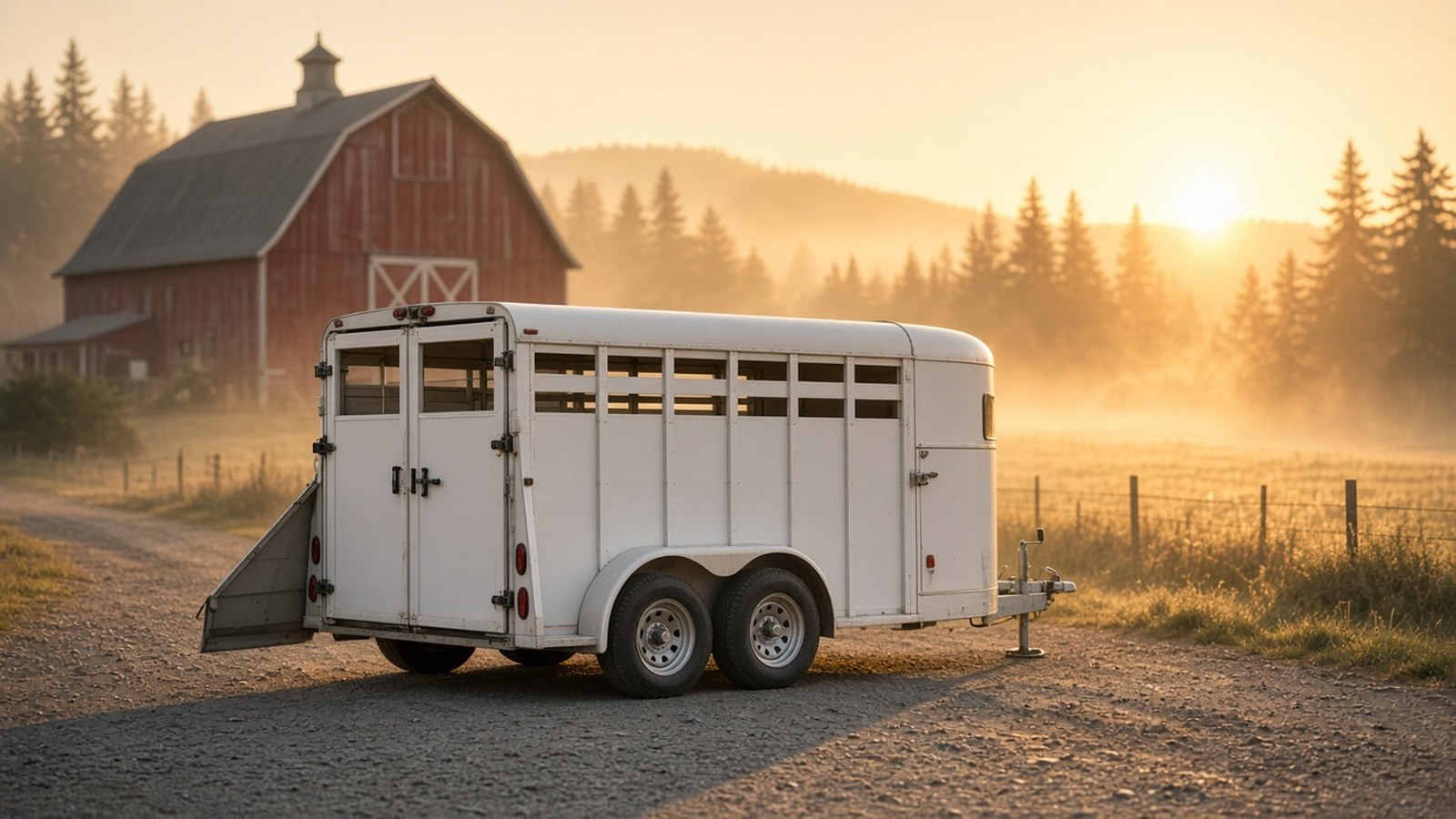
Featured Gear in This Guide
A short list for this chore. No prices, because those change. The button is a paid link.
-
Check on Amazon (paid link)
Yuwei 7 Inch 1080P Digital Wireless Backup Camera System with 4-Channel DVR
Yuwei
Best for Watching horses while driving
-
Check on Amazon (paid link)
ROBLOCK Heavy Duty Rubber Wheel Chocks, 1 Pair
ROBLOCK
Best for Securing a parked trailer
-
Check on Amazon (paid link)
Master Lock 389DAT Universal Trailer Coupler Lock
Master Lock
Best for Theft deterrent when unhitched
-
Check on Amazon (paid link)
QHP Slow Feeder Hay Bag for Horses
QHP
Best for Calm, slower eating en route
Hauling horses is one of those jobs where small oversights turn into big problems. A tire that looked fine in the driveway, a hay bag hung too low, a coupler latch that was not quite seated: any of these can turn a routine drive to a show, a vet appointment, or a trail ride into a dangerous afternoon on the shoulder of a highway. The good news is that most hauling trouble is preventable with a consistent pre-trip routine and a few pieces of gear that stay in the truck.
This is the checklist we use, followed by four pieces of equipment worth keeping on board and a simple plan for the flat tire that will eventually happen.
The pre-trip checklist
The night before
- Check tire pressure on the truck and trailer when the tires are cold. Trailer tires are often run at a higher pressure than truck tires; go by the sidewall and the trailer manufacturer's spec.
- Look for cracking on the sidewalls. Trailer tires often age out before the tread wears down.
- Test every trailer light: running lights, brake lights, and both turn signals.
- Check the floor. Lift mats and look for soft spots, rot, or corrosion, especially on older trailers.
- Pack water buckets, a full water jug, hay, a first aid kit for both horse and human, and spare halters and lead ropes.
At hitch-up
- Seat the coupler fully and lock the latch with a pin or clip.
- Cross the safety chains under the tongue and connect the breakaway cable to the truck, not to the chains.
- Plug in the electrical connector and test the brake controller.
- Raise the tongue jack all the way and remove the wheel chocks.
Loading
- Tie horses with quick-release knots or trailer ties with a breakaway element.
- Hang hay at a height that lets the horse eat without getting a foot over the net or bag.
- Close and latch every door, then walk around the rig one final time.
On the road
- Stop every two to three hours to check on the horses, feel the hubs for unusual heat, and look at the tires.
- Accelerate and brake gradually and take turns wide. Horses are balancing the whole time.
The hauling gear that earns its spot
1. Eyes on the horses: Yuwei Wireless Backup Camera System
Not being able to see your horses for hours is the most nerve-wracking part of hauling. A wireless camera mounted inside the trailer lets you check whether a horse is scrambling, down, or pawing without pulling over. This kit pairs a 1080P camera with a 7-inch monitor for the cab, has infrared night vision for pre-dawn departures, and the monitor supports up to four cameras, so you can add a second one for the rear view or for a second stall later.
Why we like it: Real peace of mind for a mid-range investment, plus a backup view that makes reversing into a tight show spot far less stressful. Trade-offs: Each camera needs a 12-volt power source in the trailer, and wireless range can be reduced by aluminum trailer walls and long goosenecks. Mount and test it at home before your first long haul.
Check current price on Amazon (paid link)
2. Stay put: ROBLOCK Heavy Duty Rubber Wheel Chocks
Any time a trailer is unhitched or parked on a slope, it should be chocked. A loaded horse trailer shifting while someone is standing behind it is a real hazard. Solid rubber chocks grip pavement, gravel, and grass far better than lightweight plastic ones, and a connecting rope makes them easy to pull out and find in the dark.
Why we like it: Heavy, grippy, weather-resistant, and inexpensive for what they prevent. Trade-offs: Rubber chocks are heavy. Store them in a dedicated bin in the tack compartment so they do not slide around.
Check current price on Amazon (paid link)
Flat tire plan: carry a spare, a lug wrench that fits, and a ramp or jack rated for the load
Changing a flat on a loaded tandem-axle trailer with an undersized bottle jack on a soft shoulder is dangerous. Many haulers carry a drive-up tandem tire ramp: you pull the good tire on the same side up onto it, which lifts the flat off the ground without unloading horses or crawling under the frame. Popular ramps go in and out of stock, so check what is available from a reputable brand, and confirm it suits your suspension type and axle spacing before relying on it. Whatever you choose, practice once in the driveway, keep a properly inflated spare, and carry a lug wrench that actually fits your trailer's lug nuts.
3. Theft deterrent: Master Lock 389DAT Universal Coupler Lock
Unhitched trailers at shows, trailheads, and even at home are easy targets. A coupler lock blocks the ball socket so nobody can back up and drive away with your rig. This universal model fits the common 1-7/8, 2, and 2-5/16 inch couplers, which covers most bumper-pull horse trailers.
Why we like it: Highly visible, simple to use, and fits most couplers without hunting for the right size. Trade-offs: No lock stops a determined thief, but a visible lock pushes most of them on to an easier target.
Check current price on Amazon (paid link)
4. Calm eating on the road: QHP Slow Feeder Hay Bag
Hay keeps horses occupied and their guts moving on long hauls. A slow-feed bag with smaller mesh openings stretches that hay out over more miles and cuts down on the dust and loose hay that end up in eyes and on the floor. Sturdy polyester construction with multiple hanging rings lets you hang it at a safe height.
Why we like it: Less waste, less dust, and a calmer traveler. Trade-offs: Horses new to slow feeders can get frustrated at first. Introduce it at home before a long trip.
Check current price on Amazon (paid link)
Common mistakes to avoid
- Skipping the tire check. Most trailer emergencies start with tires. Check pressure and sidewalls every time.
- Hanging hay too low. A horse can get a leg tangled. Hang bags and nets at about withers height.
- Forgetting the breakaway battery. Test it regularly. A dead battery means the trailer brakes will not engage if it ever separates.
- Driving like you are not towing. Leave extra following distance and brake early. Your horses feel every stop.
The bottom line
Safe hauling comes down to routine. Run the same checklist every time, keep a few critical tools in the truck, and give yourself a way to see what is happening behind you. A camera, good chocks, a coupler lock, a slow-feed hay bag, and a practiced flat-tire plan will not replace good habits, but they make good habits a lot easier to keep.
Related guides
Practical Tack Room Organization for Saddles, Bridles & Blankets
Turn a cramped tack room into an organized, easy-to-clean space with a folding saddle rack, a multi-hook bridle rack, a swinging blanket bar, a latching grooming box, and a breathable pad bag.
Winter Barn & Turnout Prep Essentials for Cold Weather
Keep horses warm, watered, and fed through cold snaps with a waterproof turnout blanket, a heated bucket, a floating tank de-icer, a slow-feed hay net, and insulated chore gloves.
Everyday Barn Grooming Tote Essentials That Actually Last
Build a no-fuss grooming kit that covers daily care: a stiff dandy brush, a soft finishing brush, a rubber curry, a hoof pick with brush, and a tough tote to carry it all.