Practical Tack Room Organization for Saddles, Bridles & Blankets
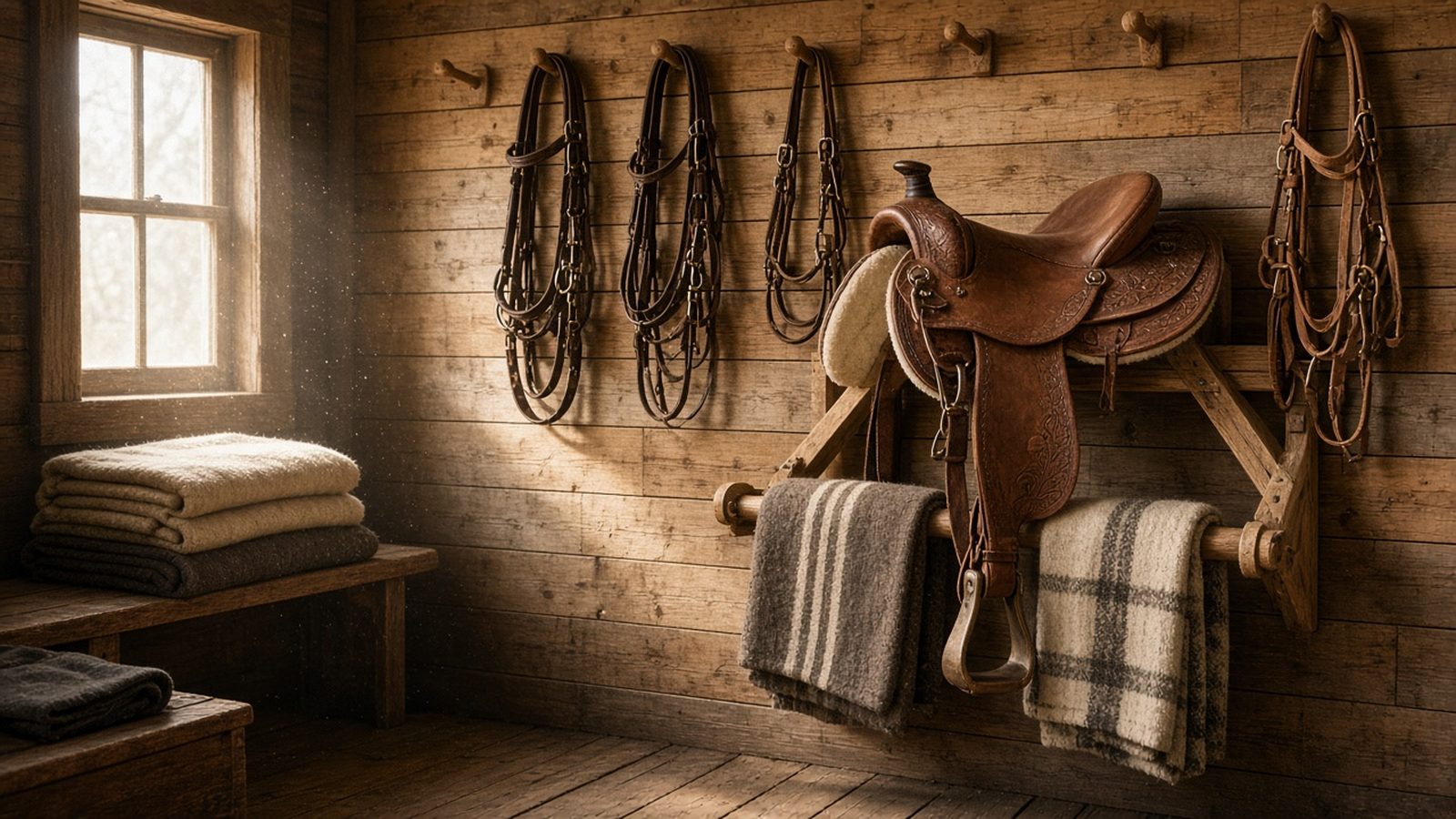
Featured Gear in This Guide
A short list for this chore. No prices, because those change. The button is a paid link.
-
Check on Amazon (paid link)
High Country Plastics Folding Saddle Rack, Wall Mount
High Country Plastics
Best for Space-saving saddle storage
-
Check on Amazon (paid link)
Intrepid International Wall Mount 5 Spot Bridle Rack
Intrepid International
Best for Tangle-free bridle hanging
-
Check on Amazon (paid link)
Country Manufacturing 2-Pack Swing Out Blanket Bar
Country Manufacturing
Best for Drying and storing blankets
-
Check on Amazon (paid link)
HORZE Smart Grooming Box with Removable Tray
HORZE
Best for Latching, dust-tight supplies
-
Check on Amazon (paid link)
Tahoe Tack Easy Carry Breathable Saddle Pad Carry Bag
Tahoe Tack
Best for Ventilated pad storage
Every barn has one: the tack room where saddles sit on the floor, bridles hang three deep on a single nail, blankets are tossed over a stall door, and nobody can find the hoof pick. It is not just frustrating. Leather left on the floor gets scuffed and mildews, tangled bridles get pulled and stretched, and damp blankets stored in a pile start to smell and rot. A well-organized tack room protects expensive gear and makes getting ready to ride a lot faster.
Here is how to plan the space, and the five organizers that do the most work.
Plan by weight and frequency
Before you put a single screw in the wall, sort your gear into two questions: how heavy is it and how often do I use it.
- Heavy and used daily (saddles): mount low enough to lift on and off without straining your back, usually around waist to chest height.
- Light and used daily (bridles, halters, lead ropes): eye level, closest to the door.
- Bulky and seasonal (blankets, sheets, coolers): along a wall where they can air out, ideally with a swing-out bar.
- Small and loose (brushes, fly spray, ointments, spare parts): in a latching box or bin so mice and dust stay out.
Mount everything into studs or solid blocking. A loaded saddle rack can carry a lot of weight, and drywall anchors will not hold.
The 5 tack room organizers
1. Saddles off the floor: High Country Plastics Folding Saddle Rack
A wall-mounted saddle rack keeps the tree supported and the leather off the ground, which is the single most important thing you can do for a saddle's lifespan. A folding rack tucks flat against the wall when the saddle is in use, so it does not become a hip-height hazard in a narrow tack room. Powder-coated steel holds both Western and English saddles.
Why we like it: Strong, simple, and it reclaims floor space immediately. Trade-offs: Heavy Western saddles need solid mounting into studs. Measure your wall spacing before buying several.
Check current price on Amazon (paid link)
2. Bridles that hang right: Intrepid International 5 Spot Bridle Rack
Hanging a bridle on a nail bends the crownpiece into a sharp crease, and stacking several on one hook means you have to untangle everything to get to the bottom one. A rack with rounded, spaced hooks supports the headstall in a natural curve and gives each bridle its own spot. Label each hook with the horse's name and the whole barn will know where things go.
Why we like it: Five spots in a small footprint, and it protects the shape of your leather. Trade-offs: Rounded hooks are best for bridles; for heavy halters with chains, a separate set of halter hooks works better.
Check current price on Amazon (paid link)
3. Blankets that dry: Country Manufacturing Swing Out Blanket Bar
Wet turnout blankets need to dry fully before they are stored or the waterproofing breaks down and mildew sets in. A swinging blanket bar lets you hang them spread out against the wall, then swing the arm back flat when you need the walkway. A two-pack covers a small herd, and the bars also work for saddle pads and coolers.
Why we like it: Blankets dry faster, stay off the floor, and are easy to grab in a hurry on a cold morning. Trade-offs: Mount them where a swinging arm will not block a door or catch someone walking by.
Check current price on Amazon (paid link)
4. Supplies that stay clean: HORZE Smart Grooming Box
Open buckets of brushes and bottles collect hay, dust, and the occasional mouse nest. A grooming box with snap closures keeps everything clean, and a lift-out tray holds the small things (hoof picks, combs, a spare snap) so they do not sink to the bottom. It is also sturdy enough to double as a low step stool for braiding manes.
Why we like it: Latching lid, removable tray, and portable enough to carry to the crossties. Trade-offs: It is a step stool in a pinch, not a mounting block. Use it on level ground only.
Check current price on Amazon (paid link)
5. Pads that breathe: Tahoe Tack Easy Carry Saddle Pad Bag
Saddle pads are expensive, and they collect sweat. Storing them in a sealed plastic tote traps moisture and odor. A bag with mesh sides lets pads air out while keeping off dust and barn swallow droppings. It also makes hauling clean pads to a show simple.
Why we like it: Breathable, fits several pads, and it zips on three sides for easy loading. Trade-offs: Let pads dry fully after a ride before bagging them. Mesh helps, but it is not a dryer.
Check current price on Amazon (paid link)
Simple habits that keep it organized
- One home for every item. If something does not have a hook, rack, or bin, it ends up on the floor.
- Clean tack before you hang it. A quick wipe of the bit and the sweaty parts of the bridle each ride prevents buildup.
- Do a seasonal swap. In spring, wash and store winter blankets; in fall, wash fly sheets and bring blankets forward.
- Control humidity. A small fan, an open window when possible, or a moisture absorber keeps mold off leather.
- Keep rodents out. Store feed and treats in metal cans, and never leave grain in the tack room in open bags.
Common mistakes to avoid
- Storing saddles on their side or on the floor. It warps the tree and scuffs the skirts.
- Folding damp blankets. Hang them to dry first, every time.
- Mounting into drywall alone. Find studs or add a backer board across the wall.
The bottom line
A tack room does not have to be large to be functional. It has to give every piece of gear a home that protects it. A folding saddle rack, a proper bridle rack, a swing-out blanket bar, a latching grooming box, and a breathable pad bag will make tacking up faster and help your leather and blankets last years longer.
Related guides
Horse Trailer Safety & Road-Trip Hauling Checklist
A practical pre-trip checklist for hauling horses safely, plus four pieces of gear that help: a wireless trailer camera, rubber wheel chocks, a coupler lock, a slow-feed hay bag, and a flat-tire plan.
Winter Barn & Turnout Prep Essentials for Cold Weather
Keep horses warm, watered, and fed through cold snaps with a waterproof turnout blanket, a heated bucket, a floating tank de-icer, a slow-feed hay net, and insulated chore gloves.
Everyday Barn Grooming Tote Essentials That Actually Last
Build a no-fuss grooming kit that covers daily care: a stiff dandy brush, a soft finishing brush, a rubber curry, a hoof pick with brush, and a tough tote to carry it all.